Below are our top-rated prefabricated container home and modular store systems engineered specifically for export efficiency, tropical thermal resistance, and rapid bolt assembly on Brazilian jobsites.
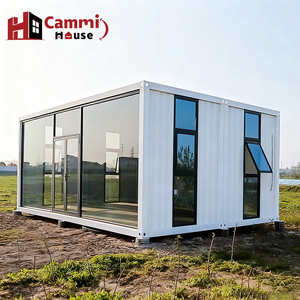
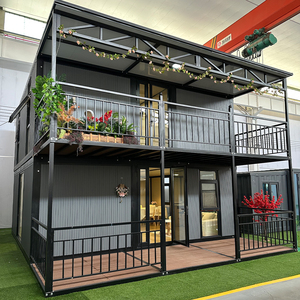
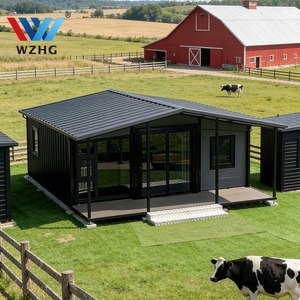
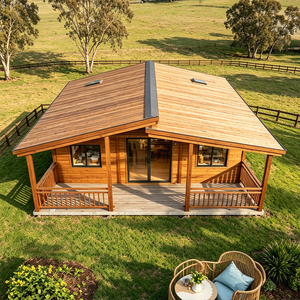
Navigating Brazil's complex infrastructure demand, high local construction costs, and stringent import regulations (Siscomex & NBR standards) requires direct engineering alignment with tier-1 Chinese manufacturers.
For Brazilian importers shipping through primary ports such as Port of Santos (SP), Paranaguá (PR), or Navegantes (SC), ocean freight represents a major percentage of total landed cost. Standard fully-welded modified shipping containers burn massive logistics capital because you are essentially paying ocean freight for empty air volume.
Top Chinese factories, such as JPS Box Homes (Jagruthi Prefab Solutions), engineered the Knock-Down Detachable Container System and Flat Pack Modular System. By precision-jigging cold-formed Q235B galvanised steel corner columns, roof beam profiles, and floor frames, an entire 20ft modular building collapses down into a compact profile. This allows exactly 8 complete units (with wall panels, roof systems, doors, and electrical wiring) to fit inside a single 40HQ shipping container, cutting per-unit freight costs by up to 70% compared to traditional assembled modules.
Brazilian engineering protocols (such as NBR 6123 for wind loads and NBR 14718 for railings and structural safety) require structural steel framing that can withstand tropical storms and high moisture environments. Top Chinese factories utilize 2.5mm–3.0mm galvanized steel profiles treated with marine-grade C3/C4 anti-corrosion epoxy primers to prevent rust along coastal regions like Rio de Janeiro and Salvador.
Brazil’s climate demands high insulation performance to reduce HVAC power consumption. Our specialized sandwich wall panels—available in 50mm, 75mm, and 100mm high-density Fire-Retardant EPS, Rockwool ($120kg/m^3$), or Polyurethane (PU)—achieve thermal conductivity values as low as $0.022 W/m\cdot K$, keeping interiors cool under intense equatorial sunshine in Mato Grosso or Amazonas.
Direct supply from factory lines provides clean NCM/HS code documentation (such as HS 9406.90 for Prefabricated Buildings), simplifying RADAR Siscomex registration for Brazilian buyers. Complete bolt-together panelized shipping prevents import delays by adhering to international phytosanitary and solid timber packing standards (ISPM 15).
Selecting the right container technology based on deployment location, installation speed, and structural requirements across Brazil.
| Container Technology | Shipping Efficiency | Site Assembly Speed | Primary Brazilian Application | Lifespan & Reusability |
|---|---|---|---|---|
| Detachable Container (Bolted) | Maximum (8 Units per 40HQ) | 4 workers / 3 hours per unit | Mining camps, Agribusiness housing, Construction site offices | 15+ Years (Highly Relocatable) |
| Flat Pack Container House | High (4-6 Units stacked per flat rack/HQ) | 2 workers / 2 hours per unit | Urban pop-up retail, School classrooms, Emergency clinics | 20 Years (Permanent / Semi-permanent) |
| Slide Folding Container | Very High (Fully pre-assembled folded profile) | 2 workers / 15 minutes per unit | Rapid military deployment, Disaster relief, Temporary event booths | 10-15 Years (Fastest Mobilization) |
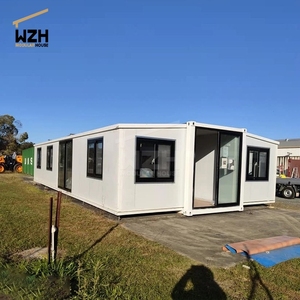
| Expandable Luxury Villa | 1 Complete Villa per 40HQ (Unfolds to 37-72 sqm) | 3 workers / 1 hour setup | Eco-Resort Pousadas, Luxury Farmstays (Fazendas), Residential Villas | 20+ Years (Turnkey Finished) |
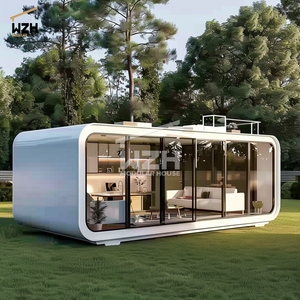
| Glass Curtain Wall Modular Shop | Medium (Custom steel glass-crater packaging) | 4 workers / 1 day setup | Pop-up cafés, Showrooms in São Paulo/Rio, Real Estate Lounges | 20 Years (High Aesthetic Value) |
From the agricultural heartland of the Midwest to coastal tourism corridors and dense urban centers, modular container shops and homes address Brazil’s unique space and speed challenges.
Brazil’s booming agricultural sector requires fast-to-deploy accommodation camps, seed storage units, and administrative offices on vast fazendas. Detachable container units can be hauled on standard flatbed trucks to remote farm locations where traditional wet-construction teams are non-existent, establishing fully insulated worker dormitories in days.
In high-density commercial districts such as Avenida Paulista or Vila Madalena, high brick-and-mortar retail rents have driven a surge in container shops, coffee kiosks, and micro-breweries. Modern 20ft glass curtain wall containers allow Brazilian retail entrepreneurs to open store frontages in weeks, with the flexibility to move their store to a new leased land plot if necessary.
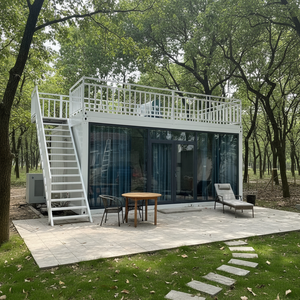
Brazil’s eco-tourism hotspots (e.g., Trancoso, Florianópolis, Jericoacoara) impose strict environmental construction limits. Expanding eco-resorts use 20ft and 40ft Expandable Container Villas fitted with glass sunrooms and pitched roof kits to build luxury guest suites with zero foundation excavation damage to coastal ecosystems.
Mining operations in Carajás and regional hydroelectric projects require heavy-duty modular dormitories, mess halls, and security check-posts. Hot-dip galvanised frame containers with fire-rated Rockwool sandwich walls provide non-combustible, hurricane-resistant staff facilities built to strict NR-18 workplace comfort standards.
How evolving ESG standards, urban zoning regulations, and off-grid technology are shaping procurement strategies in South America.
Major Brazilian construction enterprises (such as MRV, Cyrela, and Andrade Gutierrez) are adopting modular container units to eliminate jobsite water consumption, timber formwork waste, and noise pollution in urban zones, fulfilling corporate ESG metrics demanded by international investors.
Due to high electricity tariffs and remote site challenges in the Amazon basin and Northeast hinterlands (Sertão), buyers are pairing Chinese prefab containers with pre-engineered roof mounts for photovoltaic solar panels, lithium battery banks, and rainwater collection systems.
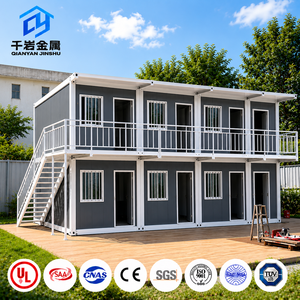
Commercial developers in cities like Curitiba and Belo Horizonte are increasingly stacking 20ft and 40ft container units to form multi-tenant strip malls, food parks, and co-working spaces. Steel staircase modules and cantilevered balconies maximize rental yield per square meter of plot area.
Why international EPC contractors, B2B importers, and commercial developers partner directly with our specialized modular production facilities.
Our automated roll-forming equipment produces high-tensile Q235B galvanized steel profiles with tolerance limits under 1mm. Automated welding jigs guarantee every corner fitting and bolted connection aligns perfectly during site erection in Brazil, eliminating site modifications.
Every batch undergoes strict structural load testing, roof water-spray tightness testing (simulating torrential tropical downpours), and paint thickness audits (minimum 80 microns galvanization + powder coating) before loading into ocean containers.
We supply fully detailed CAD layout drawings, 3D structural assembly schematics, electrical wiring single-line diagrams, and foundation point-load calculations with every export shipment so local Brazilian civil engineers can clear municipal permits quickly.
Expert answers addressing customs clearance, structural standards, thermal insulation, and ocean logistics for shipping prefab container shops from China to Brazil.
A detachable container house features a fully bolted steel frame where every component (corner posts, roof beams, floor joists, and wall panels) is unbolted and loose-packed. This allows up to 8 units to fit inside a single 40HQ container, offering maximum freight savings for long-distance export to Brazil. A flat pack container house arrives with the roof frame and floor frame pre-assembled at the factory; wall panels are packed between them into a self-contained panel package. Flat pack units take slightly more shipping volume (4-6 units per container) but assemble faster on-site with fewer loose bolts.
Our container structures engineered for coastal regions (such as Santos, Rio de Janeiro, or Salvador) utilize hot-dip galvanized steel frames ($Q235B$) coated with epoxy zinc-rich anti-corrosion primer and polyurethane topcoats. With standard maintenance, structural service life ranges between 15 to 20 years for permanent setups, and frames can endure multiple disassembly and relocation cycles without structural degradation or rust failure.
Yes. We customize electrical conduit runs, circuit breaker distributions, socket types (NBR 14136 standard three-pin plugs), and voltage configurations (127V or 220V at 60Hz as required per Brazilian state grids) directly during factory fabrication. Plumbing rough-ins for bathrooms and kitchens are pre-routed through floor panels according to client-approved CAD drawings.
Container modules do not require continuous deep concrete foundations. Single-storey installations typically rest on 6 to 8 leveled concrete pier blocks (sapatas) located beneath the frame corners and intermediate structural posts. For two-storey stacked configurations or soft soil conditions (like coastal sands or muddy agricultural zones), a simple concrete slab plinth or screw-pile foundation is recommended based on our point-load data sheets.
Shipments are classified under standard HS Code 9406.90 (Prefabricated Buildings). As the direct Chinese manufacturer, we supply all necessary commercial invoices, packing lists with detailed itemized component breakdown, Certificate of Origin (CO), and Bill of Lading (B/L) required by your Brazilian customs broker (Despachante Aduaneiro) to execute RADAR Siscomex clearance without classification disputes.
Connect directly with our engineering team today to receive CAD floor plans, structural calculations, factory-direct pricing, and container loading schedules tailored for your project.
Get a Quote