China’s detachable housing sector has developed quickly, serving construction sites, schools, offices, clinics, and temporary accommodation projects. This guide examines China’s top 10 Detachable Container House manufacturers through practical purchasing criteria. These include factory experience, steel-frame quality, insulation performance, customization ability, delivery records, and after-sales support.
A reliable manufacturer should provide clear drawings, material specifications, load information, and installation instructions. Buyers should also inspect welding quality, panel joints, flooring strength, electrical layouts, and corrosion protection. Small details matter. A poorly sealed corner can cause water damage during heavy rain. A weak floor can create safety concerns after repeated relocation.
Mark Farmer, author of Modernise or Die, warned the construction industry with a simple phrase: “Modernise or die.” His observation is relevant here. Detachable Container House production requires more than attractive catalog images. It needs controlled manufacturing, repeatable quality, and realistic project communication. However, no ranking can replace independent verification. Factory visits, sample inspections, and third-party testing remain valuable.
This overview does not assume that the largest supplier is always the best choice. Some manufacturers offer strong customization but limited overseas service. Others provide fast delivery but fewer insulation options. That trade-off deserves attention. The selected companies are assessed for manufacturing capability, product flexibility, export experience, certifications, and reported customer service. Buyers should still confirm current pricing, production capacity, local building requirements, and installation responsibilities before signing a contract.
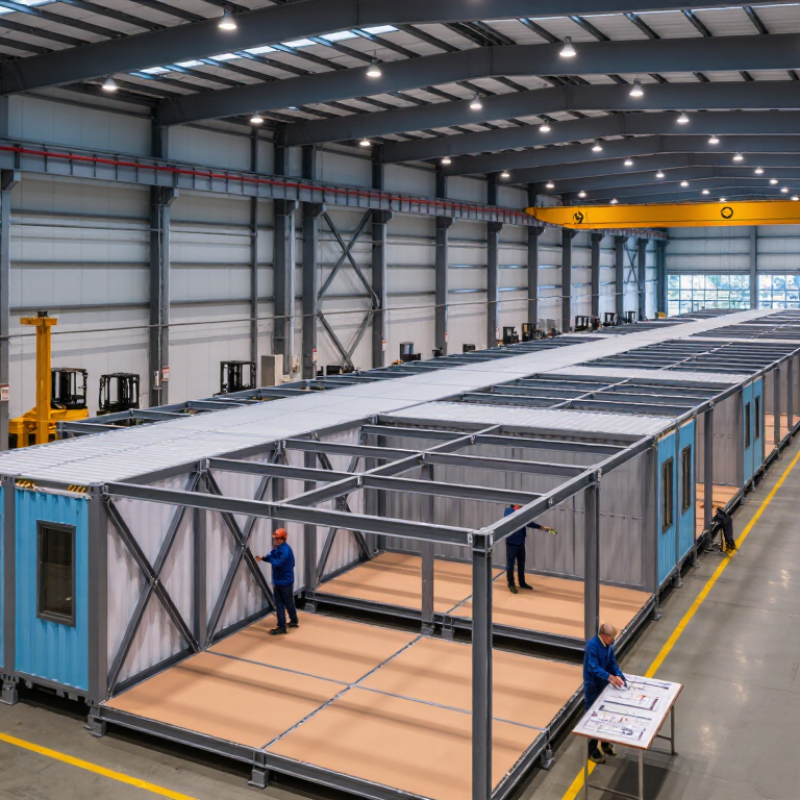
What Are Detachable Container Houses and How Do They Work?
Detachable container houses are modular buildings designed for repeated assembly and relocation. Unlike fixed shipping containers, they are not usually moved as complete steel boxes. Their columns, roof frames, wall panels, flooring, and fittings can be separated with bolts. A flatbed truck can carry many parts to a new site. This reduces transport volume and limits lifting requirements.
At the destination, workers level the ground and install a base frame. They then connect the steel structure, attach insulated panels, seal joints, and fit doors and windows. Electrical cables and water pipes usually run through planned service spaces. A small unit may become usable within several days, depending on weather, labor, and site preparation. The process looks simple. It is not always simple.
Reliable manufacturers should provide structural drawings, material specifications, installation instructions, and load calculations. Buyers should check wind resistance, fire performance, insulation thickness, drainage, and local approval requirements. A house that performs well in a mild climate may need stronger connections in coastal or snowy regions. “Detachable” also does not mean maintenance-free. Bolts can loosen, seals can age, and poorly prepared ground may cause uneven floors. In my experience, the most useful comparison is not the lowest quoted price. It is the clarity of the engineering documents, the accuracy of component labeling, and the support available during installation. Manufacturers can still make mistakes, so independent inspection before occupancy remains sensible.
How to Evaluate China’s Detachable Container House Manufacturers
Evaluating China’s detachable container house manufacturers requires more than comparing online prices. Start with factory evidence, not polished photographs. Ask for business registration, production videos, inspection records, and recent project references. A reliable supplier should explain its steel grade, welding process, panel thickness, insulation density, and roof drainage design. Vague answers are warning signs.
Request detailed drawings before discussing the final quotation. Check floor loading, wind resistance, fire performance, electrical protection, and connection methods. These details affect safety and long-term maintenance. Ask whether the design can meet your local building requirements. A capable technical team will identify conflicts early. It may also admit when a requested feature needs redesigning. That honesty matters.
Inspect a completed unit if possible. Look closely at door alignment, corner joints, sealant, floor flatness, and water stains after rain. Small defects often reveal weak quality control. Request a sample room or third-party inspection before bulk production. Confirm the contract covers materials, delivery terms, installation guidance, spare parts, and warranty response times. Compare the total cost, not only the factory price. A cheap quotation may exclude foundations, transport, lifting, or electrical adjustments. I would also ask how the manufacturer handles delays and replacement parts. Some suppliers promise everything quickly, but their after-sales process remains unclear. That deserves careful reflection.
Profiles of China’s Top 10 Detachable Container House Manufacturers
China’s top 10 detachable container house manufacturers differ in experience, factory scale, and project focus. Several specialize in modular accommodation for construction sites, schools, offices, and emergency housing. Their common strengths include standardized steel frames, detachable connections, insulated wall panels, and repeatable production. Some factories offer rapid assembly with bolted structures and pre-fitted electrical routes. Others focus on custom layouts, stronger floor systems, or improved weather resistance.
A reliable profile should examine more than online photographs. Factory experience matters, especially when projects involve repeated installation and relocation. Buyers should review welding procedures, steel thickness, panel density, fire-performance documents, and quality-control records. Export capability also deserves attention. Experienced manufacturers usually provide packing plans, installation drawings, loading guidance, and responsive technical communication. The best suppliers can explain production limits clearly.
Not every factory performs equally well. Some show impressive renderings but provide limited evidence of testing or completed projects. That gap deserves caution. A practical assessment should compare sample units, inspection reports, delivery schedules, and after-sales support. Visit records can reveal details that brochures miss, such as uneven joints, weak door frames, or poor drainage design. Cost remains important, but the cheapest quotation may create higher assembly and maintenance expenses later. Manufacturer rankings should therefore reflect verified experience, engineering competence, product consistency, and honest communication, not advertising visibility alone.
How the Top 10 Manufacturers Compare by Products and Services
China’s top ten detachable container house manufacturers differ less in steel frames than in execution. Industry reports from Grand View Research estimate the global modular construction market exceeded USD 90 billion in 2022, with steady growth expected through 2030. That demand rewards factories offering repeatable designs, not only attractive renderings. Several leading suppliers focus on flat-pack units for worker accommodation and classrooms. Others produce expandable homes, foldable cabins, or welded modules with stronger weather resistance. Product comparisons should examine panel thickness, insulation performance, floor loading, fire-rated materials, and replacement access. A low purchase price can hide weak hinges, poor seals, or expensive local repairs.
Service depth creates a clearer separation. The strongest manufacturers usually provide structural drawings, electrical layouts, packing plans, installation guidance, and spare-part support. Some also coordinate container loading and site supervision.
According to the World Bank’s logistics performance research, delivery reliability affects project costs as much as transport pricing. That matters when ten homes arrive with missing bolts.
Quality systems aligned with ISO 9001 can improve traceability, but certification alone proves little. Buyers should request factory inspection records, material test reports, and photographs from completed sites.
The comparison is not perfect.
Research from the International Energy Agency shows buildings remain a major source of global energy demand, so insulation and ventilation deserve more attention. Yet many product tables still highlight dimensions first. A practical evaluation should score thermal comfort, customization speed, delivery consistency, installation training, and after-sales response. Price remains important, but it should not dominate the decision. Even experienced buyers can misjudge coastal corrosion, local permits, or foundation costs. That is where manufacturer transparency becomes a measurable advantage.
What to Consider Before Choosing a Chinese Manufacturer
Choosing among China’s top 10 detachable container house manufacturers requires more than comparing catalog prices. Check factory experience, welding procedures, material traceability, and completed projects. Ask for dated site photographs, not only polished renderings. A reliable supplier should provide structural drawings, load calculations, fire-resistance details, and installation instructions.
The 2024 Global Status Report for Buildings and Construction, published by UNEP and GlobalABC, states that buildings consumed about 32% of global energy and produced roughly 34% of global carbon emissions. This makes insulation, windows, airtightness, and energy systems important selection criteria. Request tested U-values, panel specifications, and evidence of quality control. ISO 9001 certification can support process consistency, but it does not guarantee product performance. Independent inspection still matters. I have seen attractive units fail basic communication checks because drawings used different dimensions. Small errors become expensive after shipment.
Tips: Compare complete landed cost, not factory price alone. Include packaging, inland transport, customs handling, foundations, assembly, and replacement parts. Confirm steel grades, coating thickness, electrical standards, warranty limits, and delivery milestones in the contract. Request a sample unit or factory inspection before mass production. A third-party inspection before loading is often cheaper than correcting hidden defects later. Also verify whether local authorities accept the proposed structure and fire documentation. A manufacturer that answers slowly may still produce well, but unclear answers deserve careful reflection.
FAQS
Ask for business registration, factory videos, inspection records, and recent project references. Photos can mislead. Request dated evidence.
Request drawings showing steel grade, welding methods, panel thickness, insulation density, and roof drainage. Also check floor loading, wind resistance, fire performance, and electrical protection.
Inspect door alignment, corner joints, sealant, floor flatness, and water stains after rain. Small defects spread. A sample room can reveal weak quality control.
It is strongly advisable, especially before loading. Independent inspectors may find hidden defects earlier. This usually costs less than correcting shipped units.
Compare the complete landed cost, not only the factory price. Include packaging, transport, customs handling, foundations, lifting, assembly, electrical adjustments, and spare parts.
Ask whether the design meets local structural, fire, electrical, and planning requirements. Confirm that authorities accept the proposed drawings and fire documents. Local approval matters.
No. It may support consistent processes, but it does not guarantee product performance. Independent inspection and tested materials remain important.
Include materials, delivery milestones, installation guidance, warranty limits, spare parts, and response times. Ask how delays and replacements are handled. Promises may remain vague. That deserves reflection.
Buildings consume substantial energy, so insulation, windows, airtightness, and energy systems affect long-term costs. Request tested U-values and panel specifications. Numbers matter more than attractive renderings.
Conclusion
This guide explains what a Detachable Container House is, how its modular structure can be assembled, disassembled, transported, and reused, and why it has become a flexible option for temporary accommodation, offices, classrooms, and site facilities. It also introduces practical methods for evaluating manufacturers in China, including production capability, material quality, structural design, customization options, certifications, delivery experience, communication, and after-sales support.
The article then compares ten leading types of Chinese manufacturers by product range, manufacturing strength, customization services, pricing, lead times, installation assistance, and warranty policies, without focusing on brand names. Before making a decision, buyers should clearly define the intended use, local building requirements, climate conditions, budget, transport arrangements, installation needs, and long-term maintenance expectations. A careful comparison of technical specifications, quotations, factory capabilities, and service terms can help buyers select a reliable partner and achieve a safe, durable, and cost-effective modular building solution.